
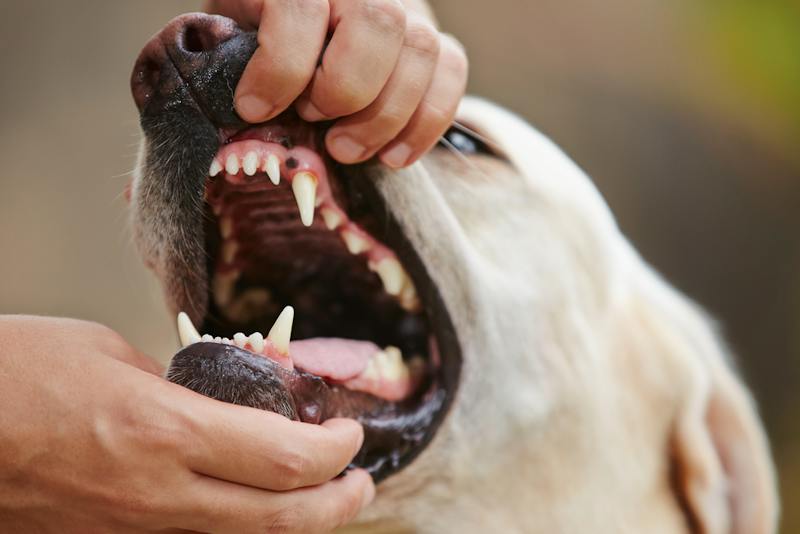
A dog bite claim in Bryan, TX may work differently than many people expect. Texas does not have a statute that automatically makes a dog owner liable for a bite. Instead, liability is largely based on case law and often depends on what the owner knew about the dog’s aggressive or dangerous behavior before the attack.
Read on to find out how these rules may affect a dog bite claim in Bryan.
Texas Does Not Have a General Dog-Bite Statute
Unlike many states, Texas does not have a statute that automatically holds an owner liable whenever their dog bites someone. Instead, dog bite claims are mainly governed by court decisions.
In Marshall v. Ranne, 511 S.W.2d 255 (Tex. 1974), the Texas Supreme Court adopted Restatement (Second) of Torts § 509. Under this rule, an owner or keeper may be liable if the dog had dangerous tendencies that were unusual for its kind and the person knew or should have known about them.
The owner’s knowledge is the main issue. Once that knowledge is proven, the owner may be liable even if they tried to prevent the attack. Without that proof, this type of strict liability claim may fail. However, the injured person may still have a negligence claim.
A trespasser generally cannot use this strict liability rule. Whether another claim is available will depend on the circumstances.
Texas Health and Safety Code Chapter 822 sets rules for dangerous dogs, including hearings, registration, restraint, and seizure. It does not create a general civil claim for an injured person. However, violating Chapter 822 or a local animal control ordinance may help support a negligence claim.
The Second Route: Ordinary Negligence
A person bitten by a dog does not always have to prove that the owner knew the dog was dangerous. Marshall also recognized that someone who owns or controls a dog with no known vicious history may still be liable for handling or restraining it carelessly.
This type of case is based on ordinary negligence. The injured person generally must show that the defendant had a duty to use reasonable care, failed to meet that duty, caused the bite, and caused actual damages.
In Bryan, a claim may arise when someone leaves a gate open, drops a leash outside a restaurant patio, or allows a dog to roam through a shared apartment courtyard. These situations do not require proof that the dog previously bit or attacked someone.
The owner may not be the only responsible party. Depending on the facts, a keeper or handler may be liable. In limited cases, a landlord may also be responsible when the landlord knew about the dog and had enough control over the property or situation to prevent the harm.
Texas does not have a statewide leash law. Leash requirements usually come from local ordinances. If someone violated a local leash or dangerous-dog rule, negligence per se may apply. A Bryan dog bite lawyer can review whether a local rule applies to the facts of your case.
Negligence per se may allow a court to use the violated rule as the standard of care instead of asking a jury what a reasonably careful dog owner would have done. It does not apply automatically, however. Texas courts have discretion over whether to adopt a regulatory or penal statute as the civil standard of care, and courts generally look at two things before doing so: whether the injured person is part of the group the ordinance was designed to protect, and whether the harm suffered is the type of harm the ordinance was meant to prevent. A dog bite in Bryan will often satisfy both parts of that test where a leash or restraint ordinance was violated, but it is not automatic, and the court must make that threshold determination first.
Comparing the Two Types of Dog Bite Claims
|
Knowledge route |
Negligence route |
|
|---|---|---|
|
What you must show |
The dog had abnormal dangerous propensities, and the owner knew or had reason to know |
The owner failed to use reasonable care in handling, supervising, or restraining the dog |
|
Owner's care |
Usually does not matter once required knowledge is established |
The central question |
|
Typical proof |
Prior attacks, warnings, complaints, animal-control reports, or confinement habits |
Gate and fence conditions, leash use, supervision, and ordinance violations |
What Actually Proves the Owner Knew?
Earlier aggressive behavior can help show that an owner knew the dog posed a danger. Useful information may include animal-control complaints, reports of prior attacks, warnings given to visitors, neighbor accounts of earlier problems, and the owner’s social media posts about the dog.
A “Beware of Dog” sign may also be relevant, although a sign alone does not necessarily prove the owner knew the dog was dangerous. Courts consider it with the other facts. Special fencing, a kennel, or a run used to keep the dog away from visitors may also help show what the owner knew.
Photographs can be important as well. A broken fence, damaged gate, loose latch, or missing restraint may be repaired soon after an attack, so photographs taken quickly can preserve details that may later matter.
What the Owner or Insurance Company May Argue
Texas follows a proportionate-responsibility system under Civil Practice and Remedies Code Chapter 33. Any percentage of responsibility assigned to the injured person can reduce the amount they may recover.
If the injured person is found more than 50 percent responsible, they generally cannot recover damages. In a dog-bite claim, the owner or insurance company may argue that the person ignored a warning or entered private property without permission, arguments that typically go to reducing the percentage of responsibility assigned to the injured person.
Provocation is argued somewhat differently. Rather than simply shaving down a damages award, provocation is often raised as a defense to the underlying strict liability claim itself, the argument being that the dog's reaction was not evidence of an abnormally dangerous propensity at all, but a response to the plaintiff's own conduct.
There is no fixed legal definition of what counts as provocation, and it does not have to be an act directed at the dog to be raised as a defense. Because provocation can undercut the claim itself rather than just reduce recovery, it is one of the more significant defenses an owner or insurer may raise.
Report the Bite and Seek Medical Care
Texas Health and Safety Code § 826.041 requires certain animal bites and scratches that could expose a person to rabies to be reported to the local rabies-control authority. The report allows the authority to investigate and determine whether the animal must be confined and observed.
Keep a copy of the report. It can provide an early record of when and where the bite occurred and identify the dog and its owner.
Seek medical care as soon as possible, even if the injury first appears minor. Dog bites can cause infection, nerve damage, scarring, and other complications that may become more serious over time. Medical records can also show the injury and the treatment required.
The Filing Deadline for Adults and Children
Most Texas personal-injury lawsuits must be filed within two years under Civil Practice and Remedies Code § 16.003(a). The period generally begins on the date of the dog attack.
The deadline can work differently when the injured person is a child. Under Civil Practice and Remedies Code § 16.001, the limitations period is generally tolled while the child is under 18. In many cases, the child’s own two-year period does not begin until the child turns 18.
A parent’s separate claim may have a different deadline. For example, a claim for medical expenses the parent personally paid may still be subject to the usual two-year period. Speaking with a personal injury lawyer in Bryan, TX can help you confirm which deadlines apply.
Dog-bite lawsuits in Brazos County may be filed at the Brazos County Courthouse, 300 East 26th Street in Bryan, in either district court or county court at law depending on the type and value of the case.
Frequently Asked Questions
Do I have a dog bite claim in Bryan, TX if the dog never bit anyone before?
Possibly. A negligence claim based on how the dog was restrained or supervised does not require any prior incident.
Who actually pays a dog bite claim?
Usually the homeowner's or renter's liability coverage of the person responsible for the dog. Some policies exclude particular breeds.
Does reporting the bite to animal control help my case?
Yes. The report creates an independent record of the incident and identifies the animal.
Is the owner responsible if I was bitten while walking on their property?
It depends on why you were there and what the owner knew. Trespass affects the analysis, so the circumstances matter.
Speak with a Bryan Dog Bite Lawyer
Brian C. Gutierrez Law understands that a dog bite can leave lasting scars and emotional harm, especially when a child is injured. The office can review what happened, identify available insurance coverage, and explain the legal options available to you.
Your first consultation is free. You do not pay an attorney’s fee unless we recover compensation for you. Contact us at (979) 243-9912 to discuss your case with a Bryan Dog Bite Lawyer.
Last reviewed: September 2026
This post was reviewed by Brian C. Gutierrez, licensed in Texas since 2006.
Content is provided for informational purposes only and does not constitute legal advice. Consult a licensed Texas attorney for guidance specific to your situation.