
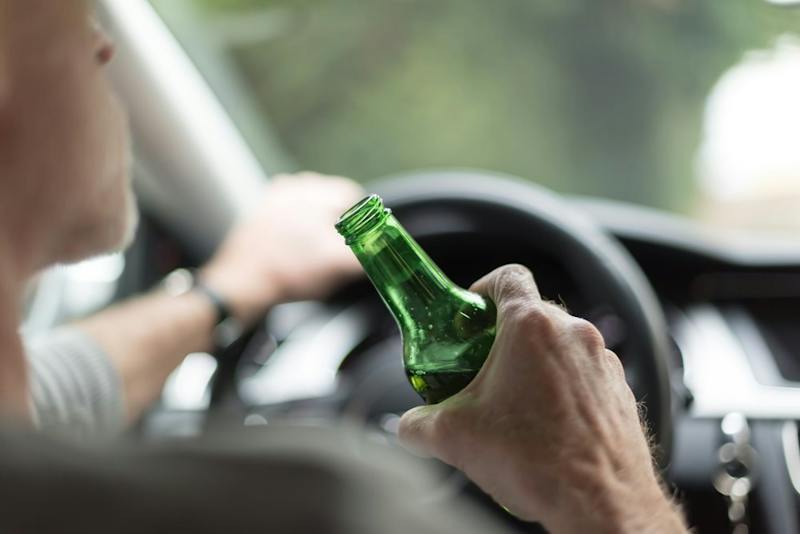
In a drunk driving claim in Brenham, TX, punitive damages are separate from compensation for medical bills and lost income. They require stronger proof and usually have a legal limit. That limit may not apply when the driver’s conduct meets the requirements for intoxication assault or intoxication manslaughter.
What It Takes to Get Punitive Damages
Compensatory damages cover losses such as medical bills, lost income, and pain and suffering. Exemplary damages, often called punitive damages, are intended to punish conduct that goes beyond ordinary carelessness. Texas law sets a higher standard of proof for these awards.
Under Texas Civil Practice and Remedies Code § 41.003, a person seeking exemplary damages must show fraud, malice, or gross negligence by clear and convincing evidence. Section 41.001(11) defines gross negligence as conduct that creates an extreme risk when the defendant knows about that risk and acts with conscious indifference. A car accident lawyer in Brenham, TX, can examine the driver’s conduct against that standard. The person bringing the claim must prove it; ordinary negligence or bad faith alone is not enough.
The jury must also agree unanimously. Under § 41.003(d), every juror must agree that exemplary damages should be awarded and agree on the amount. Agreement by ten of twelve jurors is not enough.
How the Texas Cap Works
Texas uses a formula to limit exemplary damages. Under § 41.008(b), the award cannot exceed the greater of $200,000 or twice the economic damages plus an amount equal to the noneconomic damages, with that added amount limited to $750,000.
The trial may take place in two phases. If a defendant requests this procedure under § 41.009, the jury first decides liability for compensatory and exemplary damages and sets the compensatory award. It then decides the amount of exemplary damages.
The jury is not told about the cap. Section 41.008(e) prohibits disclosing it during jury selection, through evidence or arguments, or in jury instructions. The jury decides on an amount, and the court applies any limit afterward.
Exceptions to Texas’s Punitive Damages Cap
Section 41.008(c) removes the cap when an exemplary damages claim is based on conduct that meets the definition of certain felony offenses under the Penal Code. These include intoxication assault under § 49.07 and intoxication manslaughter under § 49.08. A criminal conviction is not required; the conduct just has to be established in the civil case.
For most offenses on the list, the conduct must have been committed knowingly or intentionally. Sections 49.07 and 49.08 are exceptions to that requirement, since intoxication assault and intoxication manslaughter are defined as causing injury or death "by accident or mistake" while intoxicated, they don't require proof of intent. The conduct must still meet the other requirements for intoxication assault or intoxication manslaughter, including causing serious bodily injury or death.
|
Compensatory damages |
Punitive damages |
|
|
Purpose |
Cover losses such as medical bills, lost income, and pain and suffering |
Punish and deter certain conduct |
|
Proof required |
More likely than not |
Clear and convincing evidence |
|
Jury decision |
Ordinary verdict rules apply |
Every juror must agree on the award and its amount |
|
Limit |
No general cap in ordinary injury cases |
A formula generally limits the award, but certain exceptions apply |
Whether the exception applies depends on the facts of the crash and the conduct attributed to each defendant.
Alcohol-Related Crashes in Washington County: 2024 Statistics
Washington County had 47 alcohol-involved crashes in 2024, according to the Texas Department of Transportation. Four were fatal, accounting for four of the 11 fatal crashes recorded in the county that year.
US 290 connects Brenham with Houston and Austin. SH 36, SH 105, and Business 290 also carry traffic through the city, including visitors during wildflower season and downtown festivals.
Filing Deadlines for Brenham Crash Claims
Under Civil Practice and Remedies Code § 16.003(a), the general deadline for filing a Texas personal injury lawsuit is two years. A wrongful death claim generally must be filed within two years of the death under § 16.003(b). A wrongful death lawyer in Bryan, TX, can help a family identify which claims may apply. A survival claim generally runs from the date of injury, although § 16.062 can pause the deadline for up to 12 months after death.
A related criminal case generally does not give someone more time to file a civil lawsuit. A DWI prosecution may still be pending as the civil deadline approaches. Brenham cases are heard in the 21st and 335th Judicial District Courts at the Washington County Courthouse, 100 E Main St.
Frequently Asked Questions
Can I get punitive damages in a drunk driving accident claim in Brenham, TX?
Possibly. They require clear and convincing evidence of gross negligence, fraud, or malice, and a unanimous jury.
Is there a limit on punitive damages in Texas?
Yes, set by formula under section 41.008(b). The cap does not apply where section 41.008(c) is satisfied.
Does a DWI conviction automatically mean I can get punitive damages?
No. A DWI conviction does not guarantee an award. You must still meet the proof required in the civil case, and every juror must agree on the award and its amount.
Does waiting for the criminal case give me more time to sue?
Generally, no. A pending criminal case does not extend the deadline for filing a civil lawsuit.
How Brian C. Gutierrez Law Handles Washington County Impaired Driving Cases
A punitive damages claim often requires looking beyond the crash itself. At Brian C. Gutierrez Law we may review police records, phone data, receipts, surveillance footage, and records from businesses that sold or served alcohol to help determine what the driver was doing before the crash.
We offer free consultations, and you pay no legal fee unless we recover compensation for you. Contact Brian C. Gutierrez Law at (979) 243-9912 to discuss your case.
Last reviewed: September 2026
This post was reviewed by Brian C. Gutierrez, licensed in Texas since 2006.
Content is provided for informational purposes only and does not constitute legal advice. Consult a licensed Texas attorney for guidance specific to your situation.