
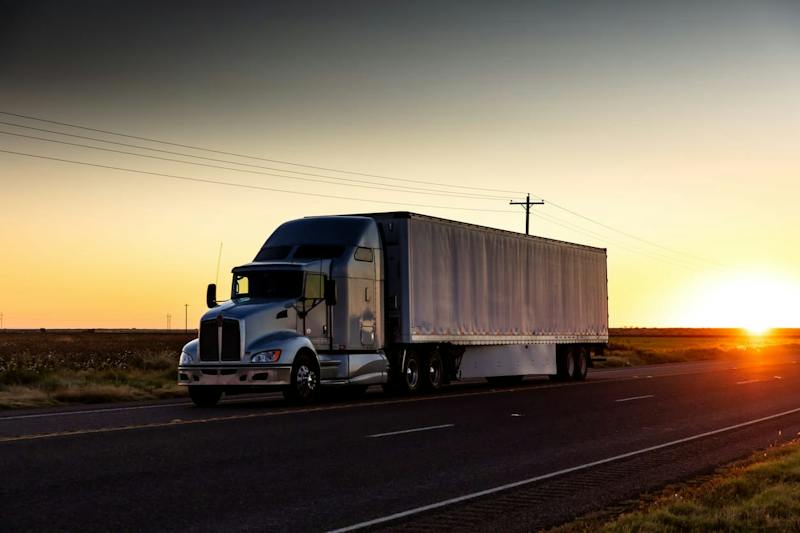
A $750,000 federal minimum is the least that a for-hire interstate carrier must hold when hauling general freight in a truck rated above 10,000 pounds, and a serious wreck can produce medical bills, lost income, and long-term care costs that exceed it. That gap shapes how a claim gets built. Brian C. Gutierrez, a board-certified personal injury trial lawyer and truck accident lawyer in Bryan, TX, searches for every policy and defendant that may stand behind the truck.
This article covers the federal and Texas insurance floors, why truck cases so often name several defendants, how Texas caps exemplary damages, and why published settlement averages reveal little about any single claim.
Federal Minimums by Cargo Type: $750,000, $1 Million, and $5 Million
Federal rules set the minimum liability coverage a motor carrier must hold, and the amount rises with the danger of the cargo. The schedule in 49 CFR 387.9 applies to vehicles with a gross vehicle weight rating of 10,001 pounds or more, as the eCFR text shows:
| Cargo Class | Minimum Coverage |
|---|---|
| General freight (non-hazardous property) | $750,000 |
| Oil and certain other hazardous materials | $1,000,000 |
| Certain bulk high-hazard cargo, such as explosives, poison-inhalation materials, and highway route controlled radioactive materials | $5,000,000 |
The terms that decide which row applies are easy to confuse:
- For-hire: The carrier transports property for compensation, as opposed to hauling its own goods.
- Interstate: The freight crosses state lines or is part of a shipment that does, including a Texas-only leg of a longer journey.
- Intrastate: The freight begins and ends in Texas with no out-of-state link.
The $750,000 tier applies to for-hire interstate carriage. The $1,000,000 and $5,000,000 hazardous cargo tiers also reach private carriers and, for bulk loads, intrastate trips. Many carriers buy more than the minimum, and the limits actually in force are among the first facts a Bryan truck accident lawyer works to confirm.
Texas Intrastate Carriers: What Applies When the Truck Never Leaves Texas
Carriers hauling general freight only inside Texas answer to the Texas Department of Motor Vehicles instead of the $750,000 federal tier. According to TxDMV, private and for-hire carriers with vehicles over 26,000 pounds must maintain at least $500,000 in coverage and keep an active insurance filing on record. The agency also lists a $5,000,000 tier for certain hazardous cargo.
A local gravel hauler or regional delivery fleet may carry less coverage than an interstate general-freight carrier, which can narrow the money available from the primary policy.
Classification is not always obvious. A truck driving between two Texas cities may still be hauling freight that began its journey in another state, and that fact can place the trip under federal rules. Dispatch records and bills of lading often settle the question.
Why Policy Limits Make Multiple Defendants Common in Truck Cases
Multiple defendants are common in truck cases because each responsible party may carry its own insurance, and a single minimum policy rarely matches the scale of a catastrophic injury. Gutierrez Law investigates who handled the truck and the load before deciding whom to name. Possible sources of coverage include:
- The motor carrier's primary liability policy
- Excess or umbrella policies that sit above the primary limits
- A leasing company that owns the tractor or trailer
- A freight broker that selected the carrier
- A shipper or loading company responsible for an unsafe load
- A maintenance facility that serviced brakes or tires
Excess and umbrella policies may add substantial funds above the primary limits, yet they often go unmentioned until a lawsuit is underway. Early preservation requests, including a spoliation letter to the trucking company, help secure the records that reveal them.
Each defendant must still be tied to its own negligence. Carriers can be responsible for their drivers under the doctrine of respondeat superior, while brokers and shippers face separate liability questions that depend on the facts.
Exemplary Damages in a Trucking Case: The Chapter 41 Cap and Gross Negligence Standard
Exemplary damages in Texas are meant to punish extreme conduct, and a claimant must prove fraud, malice, or gross negligence by clear and convincing evidence under CPRC Chapter 41. Gross negligence involves an act or omission that creates an extreme degree of risk, paired with actual awareness of that risk and conscious indifference to it. The jury must also be unanimous. In a trucking case, evidence such as ignored brake defects or knowingly falsified driver logs may support the claim.
When a jury does award exemplary damages, the same statute sets a cap. Under CPRC 41.008, the limit is the greater of $200,000 or two times economic damages plus noneconomic damages found by the jury, up to $750,000. As an illustration, a jury finding $1,000,000 in economic damages and $500,000 in noneconomic damages would produce a cap of $2,500,000.
The cap does not apply to certain felonies listed in the statute, including intoxication assault and intoxication manslaughter. A commercial driver who caused a wreck while intoxicated could therefore face exemplary damages without that ceiling.
Illustrative Settlement Ranges and Why Published "Averages" Mislead
Published averages mislead because they blend very different cases into one number. A low-speed sideswipe with soft-tissue injuries and a crash involving an 80,000-pound truck and a spinal cord injury both get labeled truck accidents, yet they share almost nothing in value. Many settlements are also confidential, so the public data that exists leans toward verdicts and press releases.
Several factors drive what a case is worth:
- Severity and permanence of the injuries
- Past and future medical costs
- Lost wages and reduced earning capacity
- Strength of the liability evidence, including driver logs and electronic data from the truck
- Insurance coverage available from every responsible party
- The claimant's own share of fault
Under CPRC 33.001, a claimant found more than 50 percent responsible recovers nothing, and a lower share reduces the award by that percentage.
Gutierrez Law's published results include truck-related outcomes ranging from tens of thousands of dollars to several million.
Talk With a Bryan Truck Accident Lawyer Before the Evidence Disappears
Coverage limits and defendant lists depend on facts that fade quickly after a wreck. Trucking companies control the logs and onboard data, and Texas generally gives injured people two years to file suit under CPRC 16.003.
Brian C. Gutierrez is a solo practitioner by choice, so clients work directly with the attorney who has tried cases before juries throughout Brazos County. To learn how coverage may affect a claim after a truck wreck, review the firm's truck accident practice page or contact Brian today to schedule a consultation.