
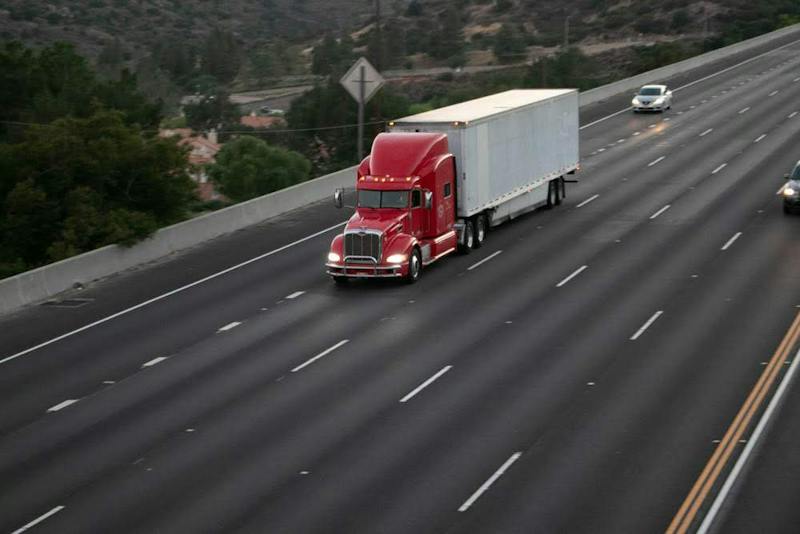
Truck accident evidence in Texas, including electronic logging device (ELD) data and engine records, often remains under the trucking company’s control. Storage policies and legal requirements affect how long those records stay available. Requesting preservation early can help protect evidence needed to investigate the crash.
What Records Can Help Show How a Truck Crash Happened in Bryan, TX?
Engine data, ELD records, GPS information, dispatch messages, camera footage, and company files can help explain a commercial truck crash. These records may provide details beyond the crash report, photographs, and accounts from the people involved.
Depending on the equipment, an engine control module may save speed, accelerator use, and braking data around a crash. The available information depends on the system and whether it recorded the relevant activity.
ELDs serve a different purpose: they document driving hours and duty status. They are not required to record speed or braking data. A truck’s “black box” data and its ELD records should therefore be identified separately.
Fleet tracking systems may record the truck’s route and driving activity. Dispatch records may show the load, delivery schedule, and messages sent to the driver. If available, forward-facing camera footage may show lane positions and how the collision happened.
The driver qualification file may show the driver’s qualifications and the company’s review of their driving history. Maintenance and inspection records may reveal earlier equipment problems. A commercial truck accident lawyer in Bryan, TX can help obtain and preserve these records.
Why Truck Accident Evidence Can Disappear Quickly
Routine deletion, repairs, and continued use of the truck can cause evidence to disappear. Different systems store information for different periods, so there is no single retention deadline for every record.
|
Record or evidence |
Who controls or handles it |
How it can be lost |
|
Engine control module data |
The trucking company or vehicle owner |
Depending on the system, later activity may overwrite data; repairs or component replacement may also make it unavailable |
|
Duty status records |
The trucking company, sometimes through an ELD provider |
Records may be deleted after the required retention period unless a preservation duty requires keeping them longer |
|
Tracking and GPS records |
The trucking company or its service provider |
Records may be deleted under the provider’s storage policy |
|
Camera footage |
The trucking company or its service provider |
New footage may overwrite older recordings, depending on the system |
|
Physical evidence at the crash site |
Investigators, road crews, towing companies, or others handling cleanup |
Debris may be moved or removed to reopen the road |
Under 49 C.F.R. § 395.8(k)(1), covered motor carriers must retain required duty status records and supporting documents for at least six months from receipt. Federal rules also require a separate backup copy of ELD records for six months.
These are minimum retention requirements. A duty to preserve relevant evidence for litigation may require keeping records longer. The six-month rule does not establish a storage period for every camera recording, GPS record, or engine module.
Why Early Preservation Matters Under Texas Law
Early preservation helps protect evidence before routine operations make it unavailable. The loss of evidence does not automatically entitle an injured person to an unfavorable jury instruction against the trucking company.
In Brookshire Brothers, Ltd. v. Aldridge, 438 S.W.3d 9 (Tex. 2014), the Texas Supreme Court explained that the judge decides whether spoliation occurred and which remedy applies. A spoliation instruction allows jurors to draw an unfavorable conclusion from missing evidence.
Generally, that instruction requires specific intent to conceal discoverable evidence and a finding that a lesser remedy would not address the harm. Negligent loss qualifies only in rare cases that irreparably prevent the other party from meaningfully presenting a claim or defense.
A preservation duty arises when a party knows or reasonably should know there is a substantial chance of a claim and that evidence under its control will be material and relevant. The duty may begin before a preservation letter arrives.
A preservation letter identifies the evidence to protect and documents notice of the potential claim. It does not automatically establish that a later deletion was intentional. A lesser remedy may apply when the loss does not justify a jury instruction.
A useful request identifies the crash date, time, and location, along with the tractor and trailer unit numbers, if known. It names the records to preserve and requests an inspection before repairs. A tractor trailer accident lawyer in Bryan, TX can tailor the request to the collision.
The letter alone does not compel the company to release records or permit an inspection. Access may require an agreement, formal discovery, or a court order.
Preservation also does not extend the filing deadline. Under Texas Civil Practice and Remedies Code § 16.003, personal injury lawsuits generally must be filed within two years after the claim accrues, subject to exceptions.
Which Safety Rules Apply to the Truck?
The applicable rules depend on the vehicle and its operations. According to TxDOT’s 2024 county crash report, Brazos County recorded 169 crashes involving commercial motor vehicles, including one fatal crash. Those figures do not establish which rules applied to any particular truck.
Federal motor carrier safety rules generally apply to qualifying commercial vehicles used in interstate commerce, subject to exemptions. A truck does not have to cross state lines on the crash trip: a trip entirely within Texas can form part of an interstate shipment.
For qualifying intrastate operations, the Texas Department of Public Safety adopts federal safety requirements with Texas-specific exceptions under Texas Transportation Code Chapter 644 and its implementing rules.
Identifying the applicable rules helps determine which records the company had to create and retain. Whether those records remain available is a separate question.
Where Can a Bryan Truck Accident Lawsuit Be Filed?
A lawsuit arising from a Bryan truck crash may be filed in a Brazos County state court when the venue rules permit. Some cases also qualify for federal court.
An out-of-state carrier or manufacturer does not automatically establish federal jurisdiction. Under 28 U.S.C. § 1332, diversity jurisdiction generally requires every plaintiff to have different state citizenship from every defendant and an amount in controversy exceeding $75,000, excluding interest and costs. Other requirements may apply.
Brazos County falls within the Houston Division of the United States District Court for the Southern District of Texas. Under the court’s October 2026 filing arrangements, Brazos County is assigned to the College Station place of holding court.
Procedures and discovery deadlines differ between federal and state courts. In federal court, Federal Rule of Civil Procedure 37(e) addresses electronic information lost because a party failed to take reasonable preservation steps when the information should have been preserved for litigation and cannot be restored or replaced.
An unfavorable jury instruction under that rule requires intent to deprive another party of the information’s use in the case. Without that intent, a judge may still order measures needed to address prejudice from the loss.
Frequently Asked Questions
What evidence should be preserved first after a Texas truck accident?
Engine control module data, camera footage, GPS records, dispatch messages, and ELD records should be identified and protected promptly. Some systems can overwrite electronic records quickly, so the priority depends on the truck’s equipment and storage practices.
Can I send a preservation request before hiring a lawyer?
Yes, you can send a written request identifying the crash and the evidence you want protected. Sending it promptly can document notice, but it does not guarantee preservation or require the company to provide immediate access.
What happens if the trucking company deletes the evidence?
A judge may impose a remedy if the company breached a duty to preserve relevant evidence. The remedy depends on the applicable rules, the reason for the loss, and the harm it caused.
Does a police crash report include truck black box data?
Generally, the report does not include the underlying electronic data. Obtaining those records usually requires a separate download. Investigators may obtain and discuss vehicle data during a more detailed crash investigation.
How long do I have to file a truck accident lawsuit in Texas?
Texas Civil Practice and Remedies Code § 16.003 generally allows two years after a personal injury claim accrues. For crash injuries, that is usually the crash date. Exceptions can affect the deadline, and some claims have earlier notice requirements.
How Gutierrez Law Handles Brazos County Truck Cases
Gutierrez Law can help preserve evidence before the truck is repaired or camera footage is erased. That evidence may help show what caused your crash and who may be responsible.
Your first consultation is free, and you pay no attorney’s fees unless we recover compensation for you.
To discuss your case, contact us at (979) 243-9912.
Last reviewed: October 2026
Content is provided for informational purposes only and does not constitute legal advice. Consult a licensed Texas attorney for guidance specific to your situation.